By Izzy Woodruff
In the 50 years since Durham Community Land Trustees (DCLT) was incorporated and began fighting for affordable housing, the city of Durham has experienced many transformations—periods of both blight and renewal, followed more recently by the rapid influx of out-of-staters pursuing jobs in nearby Research Triangle Park. This population boom has increased the demand for—and cost of—housing in Durham and other nearby cities, resulting in displacement and gentrification. Through it all, DCLT’s commitment to its founding mission remains unshaken. And as the organization looks ahead to the next 50 years, its dedication to advancing permanent housing affordability and community stabilization is stronger than ever.
DCLT, a Grounded Solutions Network member since 2016, was created by residents organizing to revitalize their neighborhoods and push back against rising housing costs. Since then, the organization has grown significantly and plans to continue doing so. It currently stewards 328 rentals—mostly single-family homes, duplexes, triplexes, and quads—and currently has 64 community land trust (CLT) homeowners. Many of DCLT’s previous CLT homeowners have also been able to save up and transition to ownership in the traditional market.
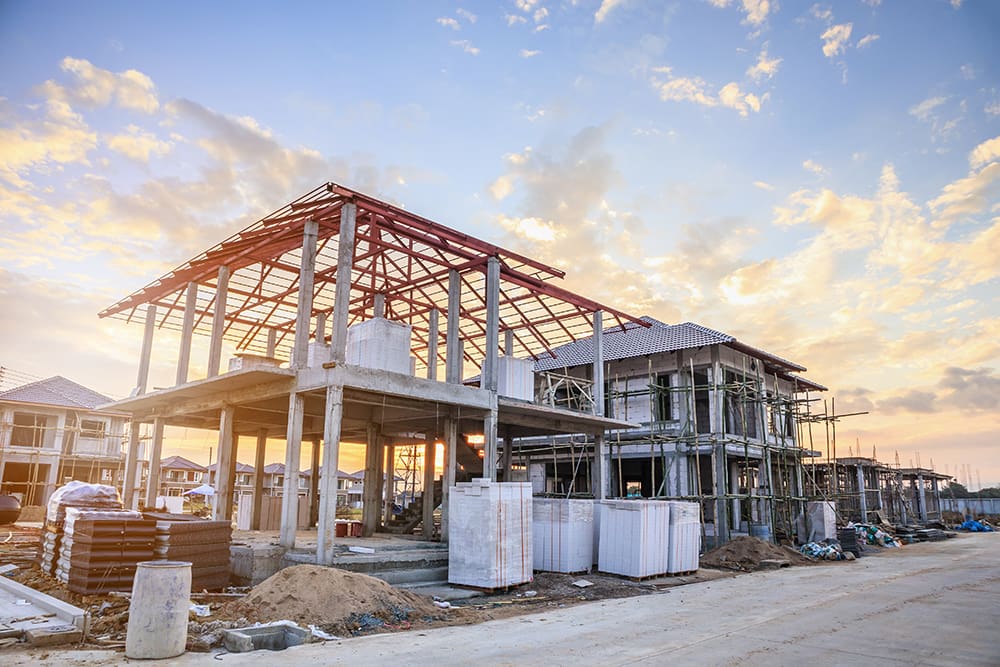
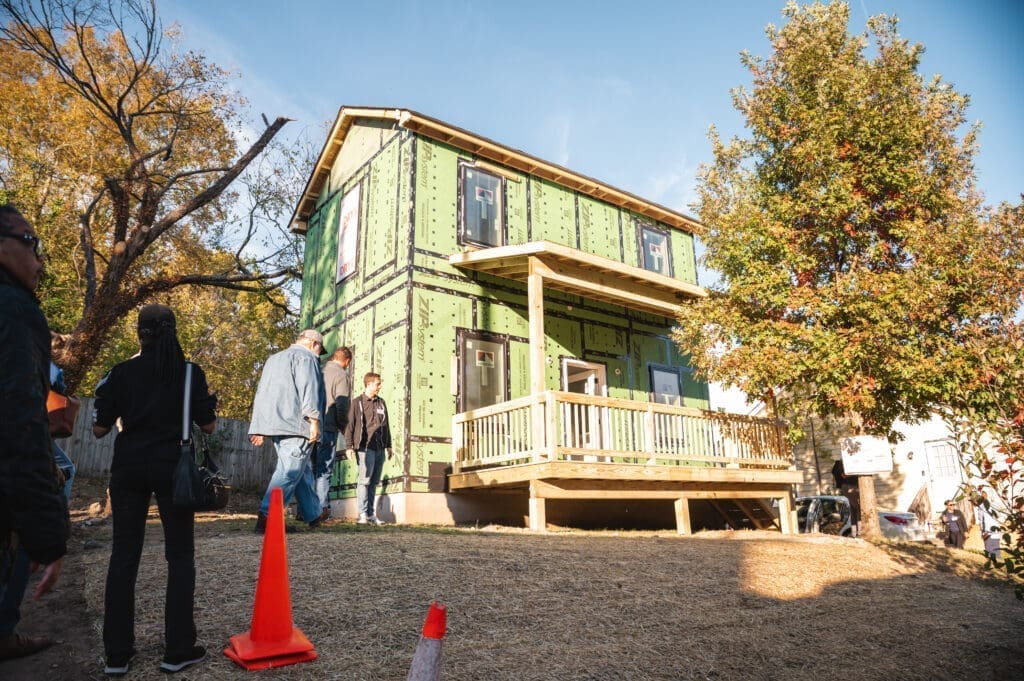
“We have a lot of new construction coming up,” says Sherry Taylor, DCLT’s executive director. “And I’m really excited about that part of it. In 2024 we purchased a 2.2-acre vacant lot and had a major acquisition of a 48-unit apartment complex under threat of being scooped up by investors.”
DCLT is also moving into the modular housing space and displayed one of its modular units on the National Mall as part of HUD’s Innovative Housing Showcase two years ago—3,000 people viewed the unit.
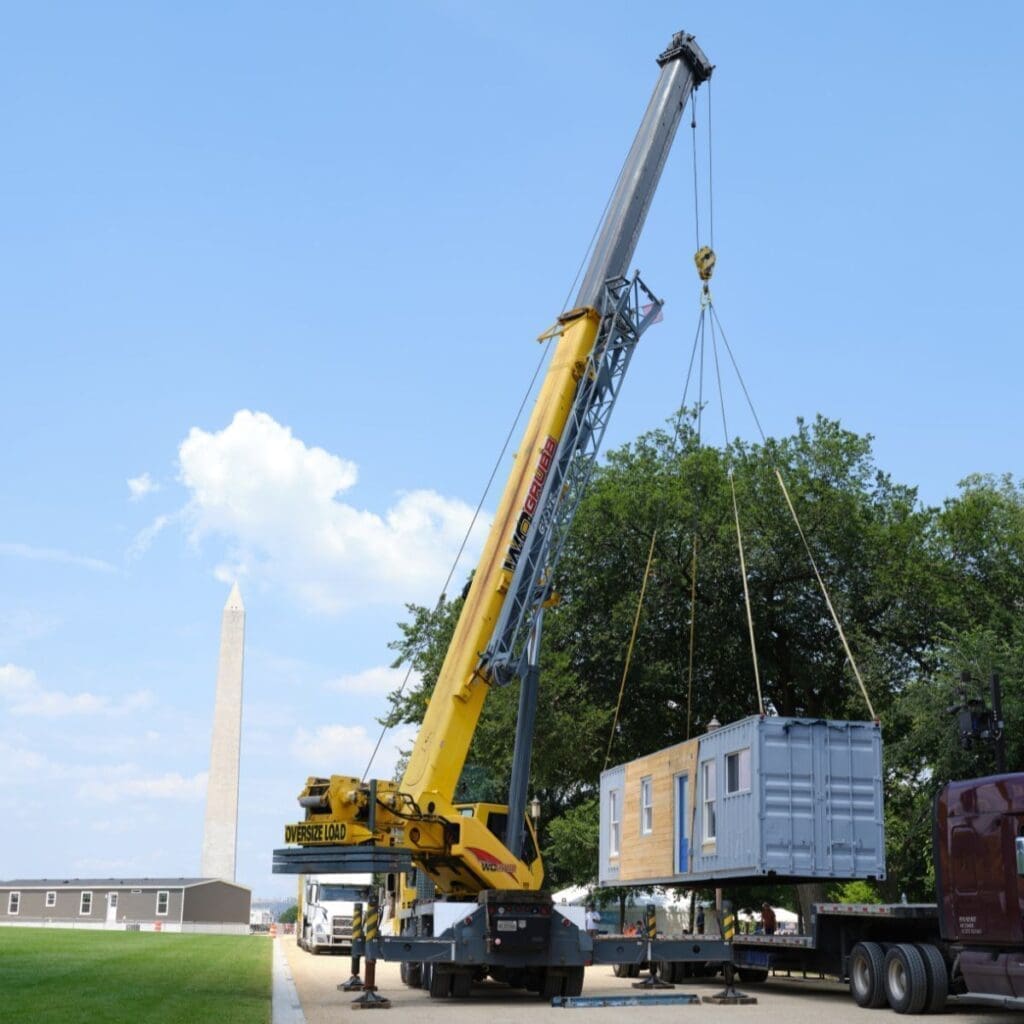
Guthrie Village is one of the organization’s current rental projects, which will utilize shipping container accessory dwelling units (ADUs); these will be one- and two-bedroom detached units in the back of single-family rentals on DCLT land. All five ADUs will be reserved for veterans.
“We’re really moving into modular construction because it’s cheaper and it can be high-quality,” Taylor says. Taylor emphasized that while the organization’s mission hasn’t changed, how it does its work has evolved. So, in addition to incorporating modular housing, DCLT is also partnering with national home developers to acquire units within their subdivisions to sell as land trust homes. This unique approach, along with rehabbing and new construction, will help the organization more efficiently reach its goal of creating 200 new land trust owners in the next five years.
DCLT is also committed to maximizing neighborhood environments, not just the properties. The organization currently has three community gardens, organizes creek restorations, and incorporates green infrastructure in its rehabs to reduce flooding and prevent stormwater runoff. ADA accessibility is also a principal component of its properties, with solar, net-zero energy, and deep green construction heavily emphasized in projects.

“We believe that affordable housing needs to be sustainable housing. It’s a health issue at this point. [And] as developers we need to make sure we protect our people,” Taylor says.
As for the next 50 years? The sky’s the limit.
“Our next 50 is going to be amazing. Four years ago, we expanded from being in eight neighborhoods to being citywide, but I also would like us to expand into the counties,” says Taylor, who joined the organization in 2020. “I can see us being an entity that can do rural and urban development. People commute for an hour or an hour and a half. Many are low-income workers who are doing a crazy commute, and it’s just digging them into a hole. So, either we build more here and bring them in, or we build more permanently affordable housing within a reasonable commuting shed.”
And judging by DCLT’s accomplishments over the years—and its current leadership—the goal of expanding from the city of Durham into nearby counties and creating many more homeowners is not far-fetched. Taylor, whose background is in urban planning, also has experience working for local government and is a licensed real estate broker. She initially joined DCLT as an asset manager overseeing the construction team and describes herself as “a developer first and an executive director second.”
“I’ve learned how to maneuver complex real estate dealings and bring them back to the community. My personal purpose is to help families create their legacy. I’m not just building to be building. As we work here, we’re also building our own individual legacies. I live here. Most of our staff live here,” Taylor says. “Our families are here so we have a stake in what happens. We’re seeing things change at a rapid pace in Durham. And that keeps me motivated. I want this to be a city where people can have a family home and pass that down to their children.”
Taylor says there are some neighborhoods in Durham in which the residents are the fourth generation of their family. “People don’t even think buying a house is possible, let alone passing one on. I want folks to have that opportunity.”
Visit https://dclt.org/ to learn more about DCLT’s work.
Izzy Woodruff is the Communications Director for Grounded Solutions Network.